


The Future of Digital Marketing: How It Will Reshape the Market in 2026
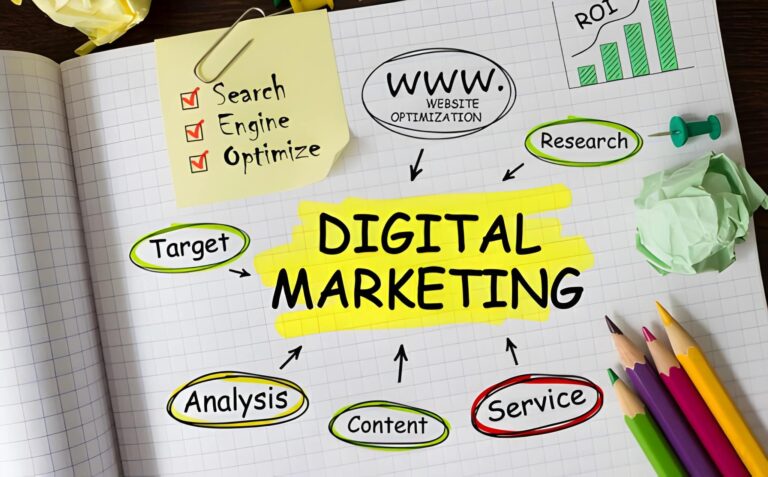
The landscape of business is shifting at an unprecedented pace. As we approach 2026, digital marketing is no longer just a department within a company; it is the heartbeat of the modern economy. With the rapid integration of Artificial Intelligence (AI), immersive technologies, and privacy-first data models, the way brands interact with consumers is undergoing a radical transformation.
In this blog, we will explore how digital marketing will influence the global market in 2026 and what businesses need to do to stay ahead of the curve.
The AI Revolution in Digital Marketing
By 2026, AI won’t just be a tool for writing captions; it will be the engine driving entire marketing strategies. We are moving from “Generative AI” to “Agentic AI“—systems that can autonomously plan, execute, and optimize campaigns in real-time.
Digital marketing in 2026 will rely heavily on predictive analytics. Brands will be able to predict consumer needs before the consumer even realizes them, allowing for a proactive market influence rather than a reactive one.
Hyper-Personalization: The New Gold Standard
Generic ads are dying. In 2026, the influence of digital marketing will be felt through “Hyper-Personalization.” Using AI and machine learning, brands will deliver unique content, product recommendations, and pricing to individual users.
Whether it’s a dynamic website that changes its layout based on who is visiting or an email that suggests products based on real-time weather and mood, personalization will be the key driver for conversion rates
The Rise of Social Commerce and "Shoppable" Everything
The line between social media and e-commerce will vanish completely by 2026. Digital marketing will shift focus toward “Social Commerce,” where the entire buyer’s journey—from discovery to checkout—happens within apps like Instagram, TikTok, or YouTube.
Influencer marketing will also evolve. We will see the rise of “Virtual Influencers” (CGI-based) who can interact with millions of followers 24/7, providing a controlled and highly scalable marketing channel for brands.
Search Evolution: Voice, Visual, and Zero-Click
Traditional SEO is changing. By 2026, a significant portion of digital marketing efforts will go toward optimizing for Voice Search (smart speakers) and Visual Search (searching via camera/images).
Furthermore, “Zero-Click” searches—where Google or AI engines provide the answer directly on the search results page—will require marketers to focus on “Brand Authority” rather than just “Website Clicks.”
Privacy and First-Party Data Mastery
With the total phase-out of third-party cookies, digital marketing in 2026 will be defined by trust. Companies that have built strong “First-Party Data” (data collected directly from their audience) will rule the market.
Market influence will belong to brands that prioritize data privacy and transparency. Ethical marketing will become a competitive advantage, as consumers will only share data with brands they trust.
Conclusion
As we look toward 2026, the influence of digital marketing on the market will be profound. It will transition from a broad outreach strategy to a precision-based science. Success will depend on a brand’s ability to blend human creativity with AI efficiency while maintaining a deep respect for consumer privacy.
Businesses that embrace these shifts today will not only survive but dominate the marketplace of tomorrow.